Spoiler: Just because it gets you high doesn’t mean it’s safe—or even legal.
Let’s talk about synthetic cannabinoids, those sketchy “lab-made” compounds that keep popping up in vape carts and gummies. Some are semi-legal. Some are straight-up illegal. Some are just bad chemistry and worse marketing.
And the worst part? Many people don’t know the difference.
🧪 What Are Synthetic Cannabinoids?
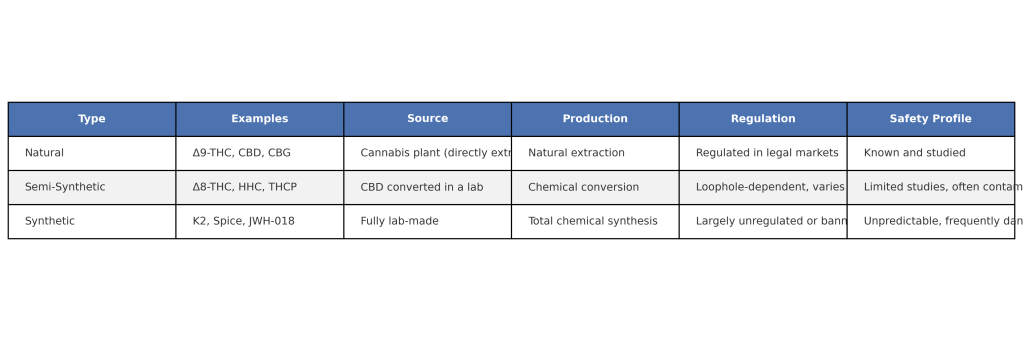
Synthetic cannabinoids are human-made chemicals designed to interact with your body’s cannabinoid receptors—just like Δ9-THC. But their structures vary wildly.
There are two broad categories:
- Lab-created knockoffs of THC (like K2/spice)—often unregulated and dangerous
- Semi-synthetic analogs made by chemically modifying hemp-derived CBD (like Δ8-THC, HHC, and THCP)
They’re often made in bulk, poorly regulated, and can contain leftover reagents, heavy metals, or mystery byproducts.
🧬 How Are They Made?
Most “alternative cannabinoids” on the market aren’t extracted—they’re synthesized from CBD isolate via acid catalysis or hydrogenation. That means:
- Δ8-THC is made by chemically converting CBD using acids and solvents
- HHC is made by hydrogenating THC analogs
- THCP and others are often semi-synthetic and poorly studied
These conversions are technically legal in some places—but that doesn’t mean they’re clean, safe, or well-regulated.
🧨 Why You Should Be Cautious
- Unregulated synthesis = potential for contamination
- No required testing for residual solvents or byproducts in many states
- Potency + unpredictability = higher risk of adverse effects
⚠️ Why is potency so unpredictable? Because many of these producers don’t use in-line or in-house testing to monitor the chemical reactions. They carry out the synthesis, then skip crucial steps like confirming yield or purity before formulating the final product. That means they may not know exactly what they made—or how much of it they made. The result? Wildly inconsistent potency and unknown side products.
Unlike flower, these don’t come from nature—they come from questionable labs, often overseas. If you don’t know where it came from, maybe don’t inhale it.

✅ How to Spot a Safer Product
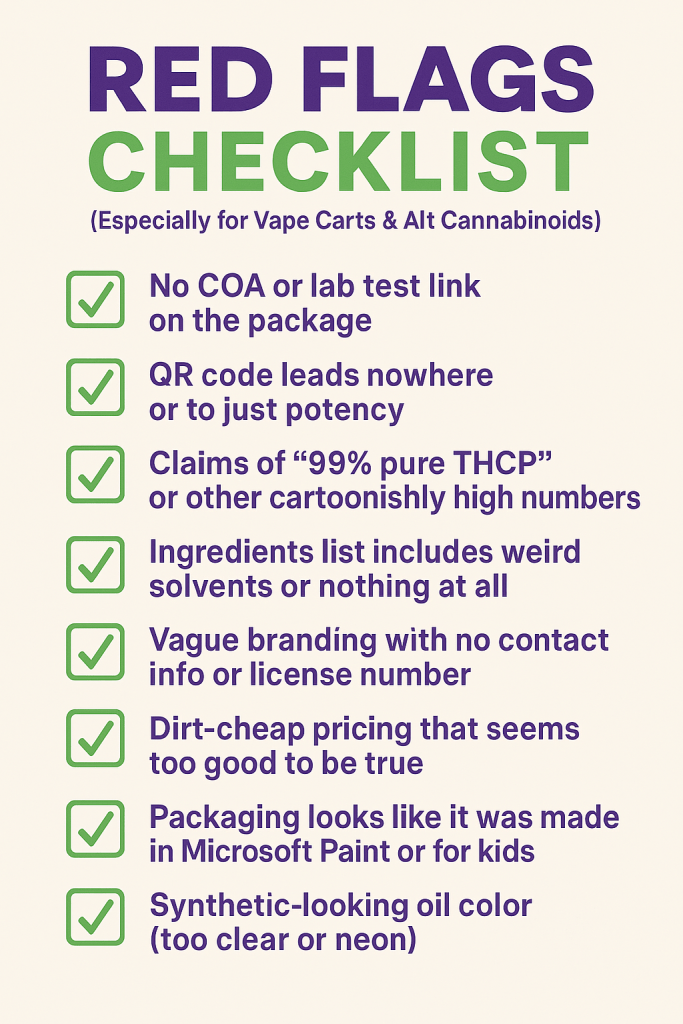
- Look for full-panel lab tests (not just potency)
- Know your source—support licensed, transparent producers
- Watch for too-good-to-be-true highs (like “legal” carts promising 99% THCP)
- Trust your gut: if it smells sketchy, it probably is
TL;DR (Too Legal, Didn’t Research)
- Synthetic ≠ safe
- Most alt-cannabinoids are made via chemical conversion of CBD
- Lack of regulation = higher risk
- Real testing, real transparency = real peace of mind
👩🔬 Author Note
I’m the scientific director of a cannabis testing lab, and I write Chronically Informed to help you smoke smarter, not sketchier.
 Chronically Informed
Leave a comment