

It might be more than just THC and good vibes.
Vape carts are wildly popular—but not always wildly safe. As a cannabis lab director, I’ve cracked open more mystery tanks than I can count. And while some are clean and legit, others are chemical chaos in a glass tube.
🧪 What’s Inside?
🌺 A Note on Added Terpenes
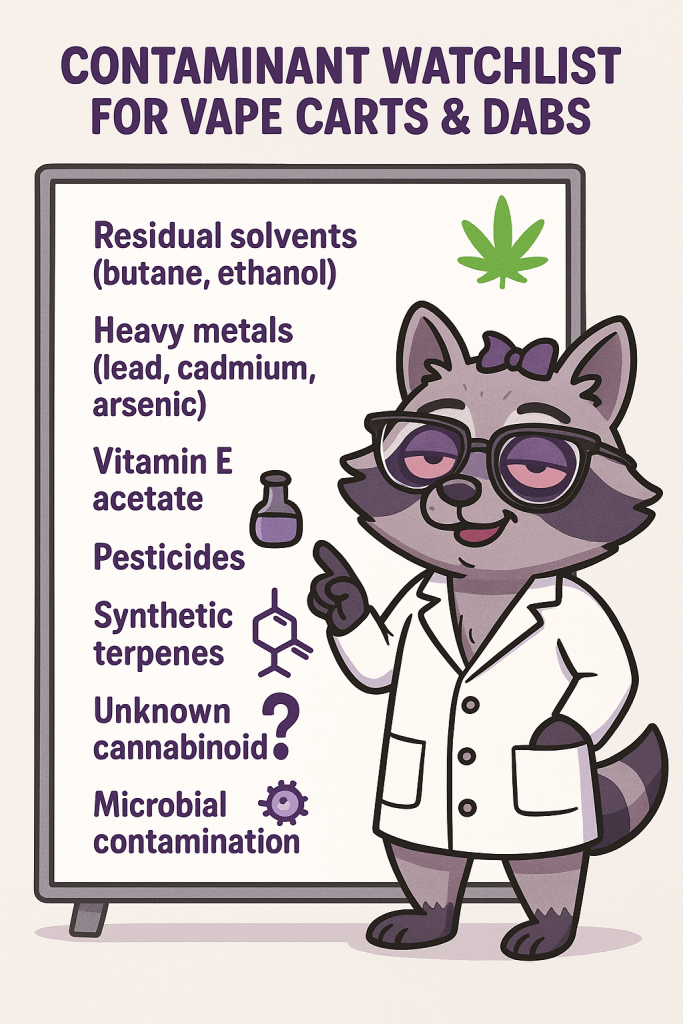
Not all terpenes in your cart are cannabis-derived. Many manufacturers use botanical terpenes (extracted from fruits, herbs, or synthetic sources) to mimic strain profiles—or just to add flavor. While some are generally recognized as safe (GRAS) for ingestion, vaping them is a different story. High heat can degrade synthetic or non-cannabis terpenes into potentially toxic byproducts, like benzene or formaldehyde.
If your cart smells like pine cleaner or bubblegum soda, there’s a good chance you’re inhaling something that was never in cannabis to begin with.
Your vape cart might contain:
- Cannabinoids – usually Δ9-THC, but sometimes Δ8, HHC, or other semi-synthetics
- Terpenes – real cannabis-derived, botanical blends, or synthetic flavorings
- Carrier Agents or Diluents – like MCT oil, propylene glycol (PG), or polyethylene glycol (PEG)
- Cutting agents – sometimes undisclosed, like Vitamin E acetate (yikes)
- Contaminants – residual solvents, heavy metals from the hardware, or pesticides from dirty extract
⚙️ How Testing (Sometimes) Fails
Not all vape products go through full-panel testing. That means:
- Some carts are only tested for potency, not for solvents, heavy metals, or microbes
- Hardware leaching (like lead from cheap metal components) often isn’t checked
- Many alt-cannabinoid products skip proper lab checks entirely
Some brands don’t even test the final formulation—they test the distillate before mixing in terpenes, fillers, and everything else. So even if the base was clean, the cart might not be.
💀 The Sketch Factor
Here’s where it gets spicy:
- Reused or counterfeit carts—refilled and resold as new
- Fake brand packaging—especially in unlicensed markets
- Mystery oil—no ingredient list, no COA, no clue what’s in it
These issues are especially common in gray and black markets, where regulation is light or nonexistent.
✅ How to Vet a Vape
- Look for a real COA—not just a QR code to nowhere
- Full-panel testing only: potency, residual solvents, heavy metals, microbes, and pesticides
- Brand transparency—licensed manufacturer with a track record
- Check the packaging—do the warnings and batch info look legit?
- Trust your nose—if it smells like nail polish remover or tastes like candy chemicals, hard pass
TL;DR (Too Cloudy, Didn’t Question It)
- Vape carts can contain more than just cannabinoids
- Not all products are tested for safety
- The packaging might lie—so check the lab results
- Buy smart, toke safer
👩🔬 Author Note
I’m the scientific director of a cannabis testing lab, and I write Chronically Informed to help you figure out what’s really in your weed—before it hits your lungs.
 Chronically Informed
Leave a comment